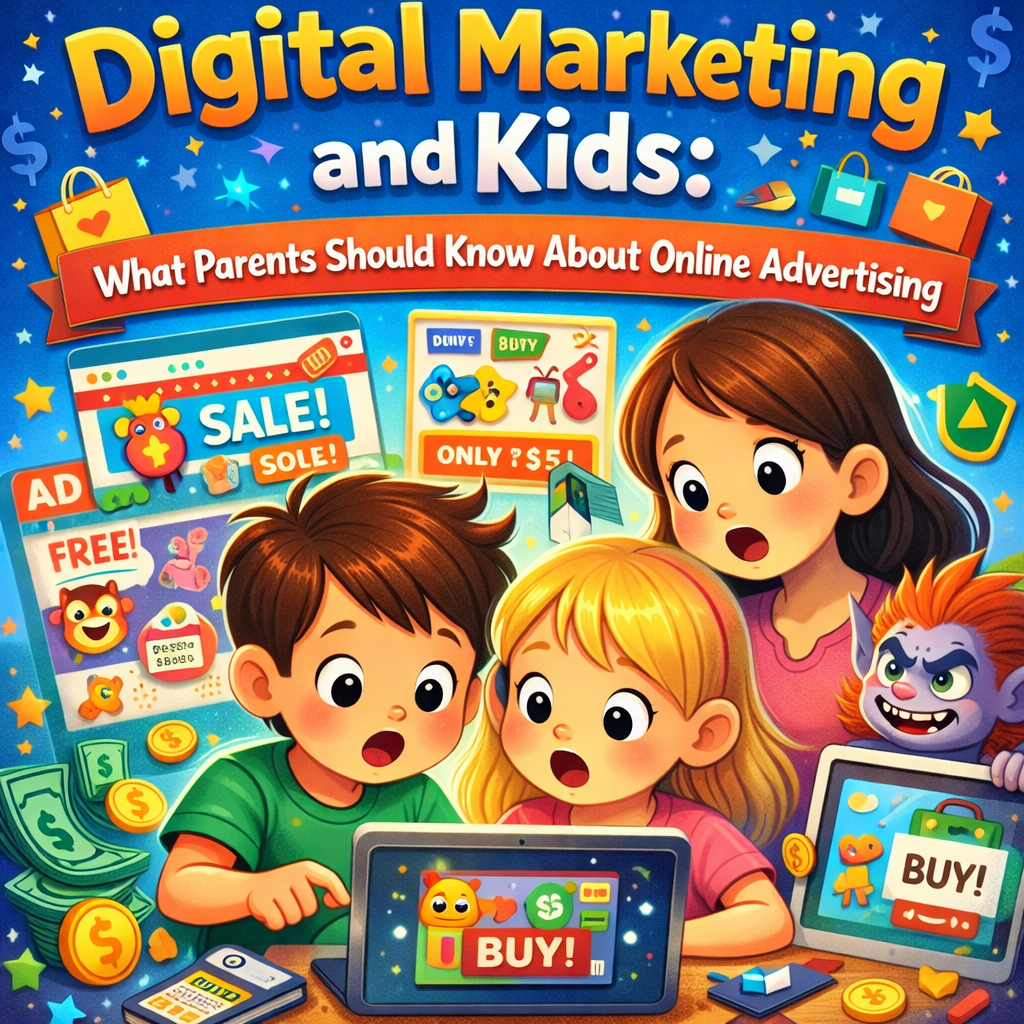
The internet has become a central part of children’s lives. From watching videos and playing games to using educational apps and social media, kids spend a significant amount of time online. While the internet offers many benefits, it also exposes children to digital marketing and online advertising designed to influence their choices and behavior.
Understanding how online advertising works can help parents guide their children toward safer and more responsible internet use.
What Is Digital Marketing?
Digital marketing refers to the promotion of products or services through online platforms such as websites, apps, social media, search engines, and video platforms. Businesses use digital marketing strategies to reach their audience and encourage them to purchase products or engage with their brand.
For children, digital marketing often appears in the form of:
- Banner ads on websites
- Video advertisements before or during content
- Sponsored content or influencer promotions
- In-game advertisements
- Product placements in videos or apps
Many of these advertisements are designed to be entertaining and interactive, which can make them appealing to younger audiences.
Why Children Are a Target Audience
Children are an attractive audience for advertisers because they influence family spending decisions and often develop brand preferences at an early age.
Digital platforms allow marketers to reach young audiences in new ways through:
- Gaming apps
- Video platforms
- Educational websites
- Social media content
- Interactive advertising
Because kids may not always recognize advertising, they can be more easily influenced by marketing messages.
The Challenge: Kids Don’t Always Recognize Ads
Younger children often have difficulty distinguishing between entertainment and advertising. For example, a child watching a video may not realize that a product being promoted is actually an advertisement.
Some forms of advertising are intentionally designed to blend into content, including:
- Sponsored videos
- Influencer promotions
- Product placements in games or apps
This can make it harder for children to identify when someone is trying to sell them something.
Common Types of Online Advertising Kids See
Children may encounter many types of digital advertising while browsing the internet. Some of the most common include:
Banner Ads
These are image advertisements that appear on websites, usually at the top or sides of a page.
Video Ads
Short advertisements that play before or during videos on streaming platforms.
In-Game Ads
Many mobile games display ads between levels or offer rewards for watching promotional videos.
Influencer Marketing
Popular online creators may promote toys, games, or products within their content.
Sponsored Content
Articles, videos, or posts created to promote a brand while appearing like regular content.
Potential Risks of Online Advertising for Kids
While advertising itself is not necessarily harmful, there are some risks parents should be aware of:
1. Consumer Pressure
Kids may feel pressured to ask parents for products they see advertised frequently.
2. In-App Purchases
Some games encourage children to buy virtual items or upgrades.
3. Data Collection
Certain apps and websites collect user data to deliver targeted advertisements.
4. Exposure to Inappropriate Ads
Not all ads are suitable for children, especially on platforms not designed specifically for younger audiences.
How Parents Can Help Children Navigate Online Advertising
Parents can play an important role in helping children understand and manage digital marketing. Here are some helpful strategies:
Teach Kids How Advertising Works
Explain that advertisements are designed to persuade people to buy things.
Encourage Critical Thinking
Ask questions like:
- “Do you think this video is trying to sell something?”
- “Why do you think this ad appears here?”
Use Child-Friendly Platforms
Choose websites and apps designed specifically for children, which often have stricter advertising rules.
Monitor Apps and Games
Review apps before downloading them and check whether they contain ads or in-app purchases.
Set Digital Boundaries
Limiting screen time and encouraging offline activities can reduce exposure to online advertising.
Building Digital Awareness
Teaching children to recognize advertising is an important part of digital literacy. As kids become more aware of marketing techniques, they learn to make informed decisions instead of being easily influenced.
Helping children understand how digital marketing works also prepares them for a future where online media plays an even bigger role in daily life.
Final Thoughts
Digital marketing is a normal part of the online world, but it can be confusing for young users who may not realize they are being targeted by advertisements.
By talking openly about online advertising and helping children understand how marketing works, parents can support their kids in becoming smarter and safer digital citizens.
With guidance and awareness, children can enjoy the benefits of the internet while learning to navigate digital content responsibly.