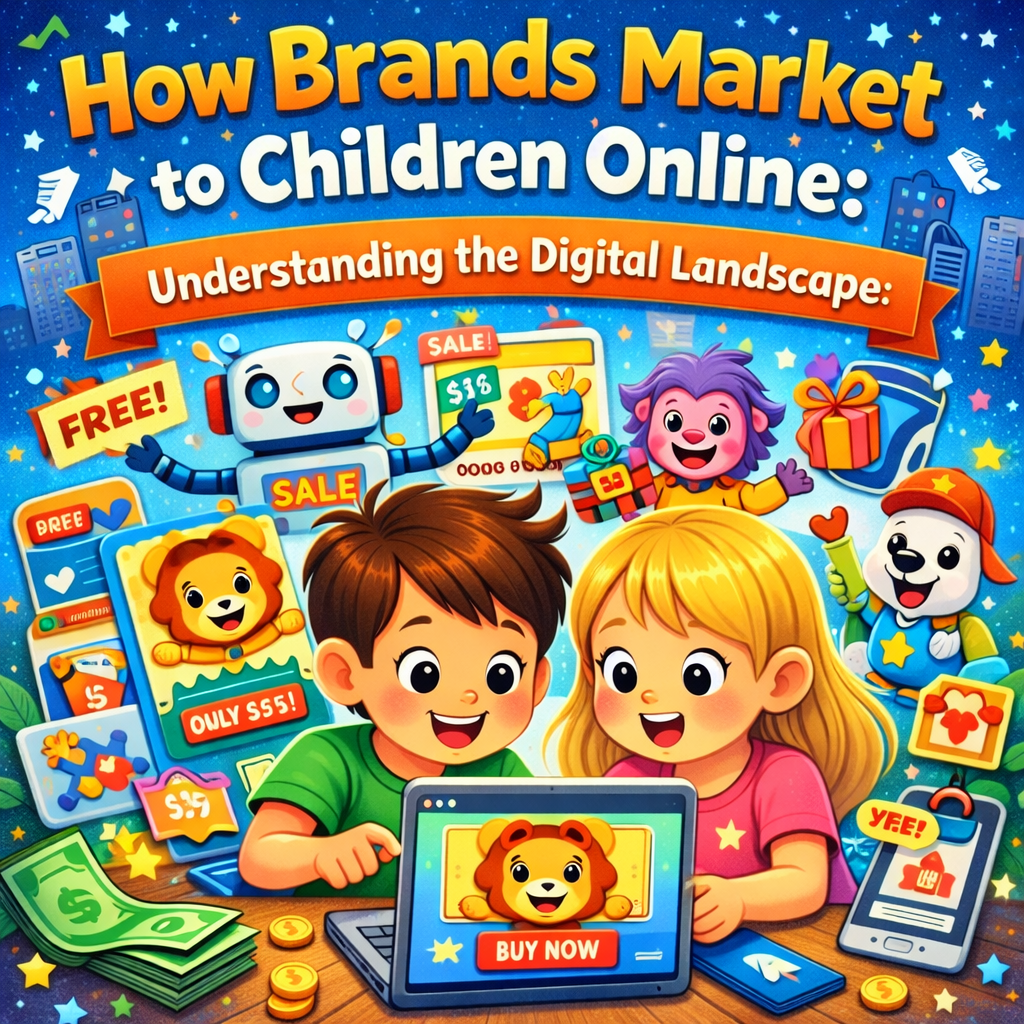
Children today are growing up in a highly connected world. From watching videos and playing games to using educational apps and social media, the internet plays a big role in their daily lives. While these digital platforms offer many learning opportunities, they also expose children to online marketing strategies designed to promote products and brands.
Understanding how companies market to children online can help parents and educators guide young users toward safer and more informed digital experiences.
Why Brands Target Children Online
Children are an important audience for marketers because they influence family spending and often develop brand preferences early in life. Companies know that when children become familiar with a brand at a young age, they are more likely to remain loyal customers in the future. Organizations like the Federal Trade Commission (FTC) provide guidance on how advertising practices affect children and how companies should market responsibly.
Digital platforms allow marketers to reach children in ways that are more interactive and engaging than traditional television advertising. These strategies often blend entertainment with marketing, making advertisements feel like part of the experience.
Common Online Marketing Channels Used to Reach Kids
Brands use a variety of digital platforms to connect with younger audiences. Some of the most common channels include:
Video Platforms
Children frequently watch videos on streaming platforms where advertisements can appear before, during, or after content. Some brands also collaborate with content creators to promote products through sponsored videos.
Mobile Games and Apps
Many children spend time playing mobile games. Some of these games include in-game advertisements, sponsored content, or prompts encouraging players to make purchases within the app.
Social Media Content
Older children and teenagers often use social media platforms where they may see brand promotions, influencer marketing, and sponsored posts. Social media engagement metrics also influence marketing strategies, especially after Instagram began hiding like counts to shift focus toward meaningful interaction.
Educational Websites
Even learning platforms may display advertisements or branded content designed to appeal to younger audiences.
Influencer Marketing and Kids
One of the fastest-growing forms of digital marketing aimed at children is influencer marketing. Influencers are online personalities who create videos, posts, or reviews about products.
When children see their favorite creators promoting toys, games, or gadgets, the recommendation may feel like advice from a trusted friend rather than a traditional advertisement. Because of this, influencer marketing can be especially persuasive for younger audiences.
Advertising in Online Games
Online games are another powerful marketing channel. Some games feature advertisements that appear between levels or offer rewards when players watch promotional videos. Experts studying advertising in online games warn that advergames can blur the line between entertainment and marketing.
In some cases, brands may also create branded games, known as “advergames,” where the entire game revolves around promoting a specific product or brand.
While these games can be entertaining, they also blur the line between advertising and play.
The Challenge: Recognizing Marketing Messages
Younger children may find it difficult to recognize when they are being targeted by marketing. Advertisements often look like regular content, making it harder for kids to understand that someone is trying to sell them something. Helping children learn about recognizing online ads and sponsored content can make it easier for them to understand when a brand is promoting a product.
This is why digital literacy is important. When children learn how marketing works, they become better equipped to recognize advertising and make informed choices.
The Role of Data and Targeted Advertising
Many websites and apps collect information about users to show advertisements that match their interests. This process is known as targeted advertising.
While regulations exist in many countries to limit data collection from children, parents should still be aware that certain platforms may use browsing behavior, search activity, or app usage to determine which advertisements are shown. Laws such as the Children’s Online Privacy Protection Act (COPPA) were created to help protect children’s personal data online.
Understanding how data is used helps families make safer decisions about which platforms children should use.
How Parents Can Help Children Navigate Online Marketing
Parents can take several steps to help children understand and manage the marketing messages they encounter online:
- Talk openly about how advertising works.
- Teach children to question promotional messages they see online.
- Use parental controls and child-friendly platforms.
- Review apps and games before allowing children to download them.
- Encourage balanced screen time with offline activities.
Helping children develop these skills allows them to become more confident and informed internet users. Teaching children good online netiquette also helps them behave respectfully when interacting with brands, influencers, and other users online.
Building Digital Awareness
Digital marketing is a normal part of the online world, but children benefit from learning how to recognize it. When kids understand the difference between entertainment and advertising, they can make smarter decisions about what they watch, play, and buy. Organizations promoting digital literacy for children encourage parents to help kids understand how online media and advertising work.
By supporting digital awareness and encouraging responsible internet use, parents and educators can help children navigate the digital landscape safely and confidently.
Final Thoughts
The digital world offers incredible opportunities for learning and creativity, but it also exposes children to marketing strategies designed to capture their attention. Parents who want to understand this topic further can explore how digital marketing and kids intersect in today’s online environment.
By understanding how brands market to children online, families can take proactive steps to guide kids toward healthier and safer online habits. Teaching children to recognize advertising is an important step in helping them become cyber smart and digitally aware.